
NEWS
Trump signs executive order blocking states from enforcing their own regulations around AI

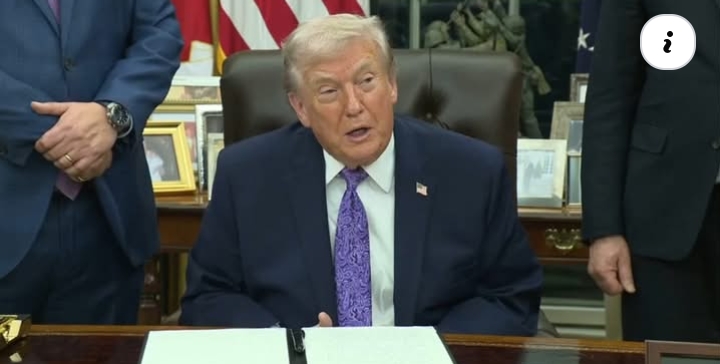
President Donald Trump on Thursday signed an executive order that blocks states from enforcing their own regulations around artificial intelligence and instead aims to create a “single national framework” for AI.
“This is an executive order that orders aspects of your administration to take decisive action to ensure that AI can operate within a single national framework in this country, as opposed to being subject to state level regulation that could potentially cripple the industry,” White House aide Will Scharf said of the executive order in the Oval Office.
The order could have far-reaching effects on US efforts to dominate the nascent technology, which has already become a significant part of the economy and the stock market but which also still remains untested in many ways.
David Sacks, the White House crypto and AI czar, said during the signing ceremony that the executive order would have the administration create a “federal framework” on AI in conjunction with Congress.
“In the meantime, this EO gives your administration tools to push back on the most onerous and excessive state regulations,” Sacks said. Notably, Sacks emphasized that the administration will not push back on state-level regulation around child safety and AI. He later wrote in a social media post that the EO “does not mean the Administration will challenge every State AI law.”
Congress killed an earlier attempt by Republicans to prevent states from regulating AI in July. The US Senate voted nearly unanimously to remove a 10-year moratorium on the enforcement of state artificial intelligence regulations from Trump’s sweeping domestic policy bill before the bill passed.
Lawmakers also declined to add an AI moratorium to the National Defense Authorization Act, despite Trump’s suggestion that they do so.
Leaders in Silicon Valley, such as OpenAI CEO Sam Altman, have argued that navigating a patchwork of state regulations could slow down innovation and affect America’s competitiveness in the global AI race with China, which they say will have implications for the economy and national security.
Critics worry the deregulation push could allow AI companies to evade accountability should their tools harm consumers.
Artificial intelligence is already subject to little overall oversight as it extends into more areas of American life – from personal communications and relationships to health care and policing.
In the absence of broad federal legislation, some states have passed laws to address potentially risky and harmful uses of AI, such as the creation of misleading deepfakes and discrimination in hiring.
But the debate over how to regulate AI has caused schisms not only in the industry but also within the conservative movement and Republican party.
On one side are figures in the administration like Sacks and Vice President JD Vance, who push for a lighter touch regulatory framework. On the other are figures such as Florida Gov. Ron DeSantis and former White House chief strategist Steve Bannon, who have been vocal about suppoting state-level regulation, arguing those guardrails are needed for the fast-moving technology.
Brad Carson, president of Americans for Responsible Innovation and a leader of the pro-AI regulation super PAC Public First, said in a statement that the executive order will “hit a brick wall in the courts.”
Carson added that the order “directly attacks the state-passed safeguards that we’ve seen vocal public support for over the past year, all without any replacement at the federal level.”
In contrast, Collin McCune, head of government affairs at the venture capital firm Andreessen Horowitz, called the order an “incredibly important first step” but called on Congress to fill the regulatory vacuum.
“States have an important role in addressing harms and protecting people, but they can’t provide the long-term clarity or national direction that only Congress can deliver,” he wrote on X

Tennis legend Serena Williams is making waves again! She’s just shared brand-new, never-before-seen photos and videos that have fans talking, especially after many asked for something fresh beyond her usual posts. The latest content is bold, eye-catching, and definitely sparking plenty of reactions online.

BBC News: Iranian state TV has confirmed the death of Ayatollah Ali Khamenei, the 86-year-old ruler of Iran for more than three decades…

Fox News: Three Troops Killed, Five Badly Wounded During ‘Operation Epic Fury’

US-Iran War LIVE: United Nations Security Council Holds Emergency Meeting After United States-Israel Strikes on Iran

“I’m over it” – Social Media Explodes After Cardi B Reveals Plans to Remove Butt Implants in Colombia

BBC News: US President Donald Trump’s opponents in the two houses of Congress have called for him to be removed from office after the violent invasion of the Capitol by a mob of his supporters….

“I Touch myself” Serena Williams wants women to pay a little more attention to their breasts, which is Breast Cancer Awareness…. In a new ad, the tennis star goes topless as she sings “I Touch Myself” by Divinyls.

BBC News Reports: The BBC understands that the British government has not authorized the United States to use UK military bases to support any potential strikes on …

PORTER: Serena Williams Reflects on Early Body Image Struggles: ‘I Had Big Boobs, Butt’ When ‘Every Athlete Was Super Thin’…
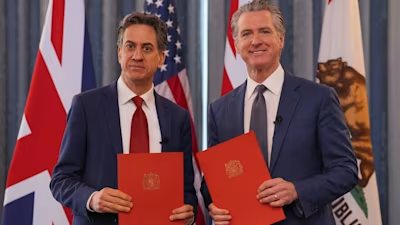
Hot News: Former President Trump Blasts UK–California Green Energy Collaboration….

What happens to Prince Harry? In early 2020, Prince Harry and Meghan Markle made headlines around the world when they announced they would step back as senior members of the British royal family. Their decision — quickly dubbed “Megxit” by the press — followed months of mounting pressures and public scrutiny.
