
CELEBRITY
IN JUST 72 HOURS: THE PROGRAM “NIGHT OF TRUTH,” LED BY TOM HANKS, SURPASSES 1.8 BILLION VIEWS — THE WALL OF SILENCE OFFICIALLY COLLAPSES. The moment of truth went on air during prime time — from the very first episode of 2026, Night of Truth exploded across social media platforms at an unprecedented pace. It was not dramatic scripting or flashy television effects that created the shock, but Tom Hanks — a man who chose to confront the truth rather than stand on the sidelines. He stepped straight into the center, carrying buried files, distorted timelines, and long-forgotten testimonies, placing them all on prime-time television. Viewers were not guided by staged emotion. They fell silent before a chilling moment: no background music, no narration — only documents and evidence. The studio was reportedly completely silent as the program brought the story of Virginia Giuffre back into the light, while powerful names continued to hide behind a wall of silence that had lasted for years. Clips are spreading at a staggering speed. The reaction has been so intense that many are calling it one of the most direct confrontations in modern television — because Night of Truth was not created to entertain. It was created to break the silence and challenge power.

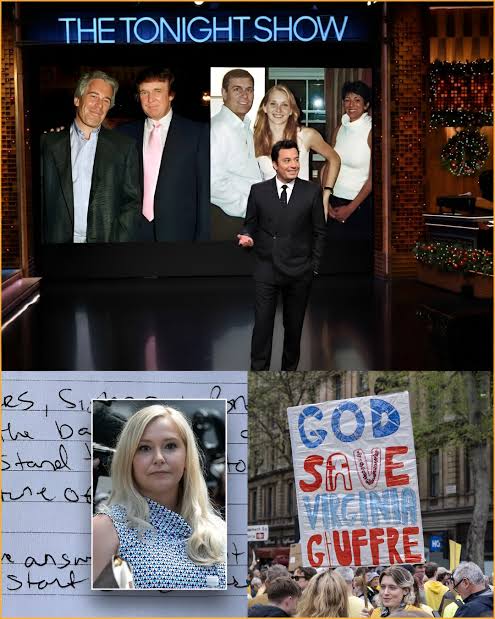
C1 IN JUST 72 HOURS: THE PROGRAM “NIGHT OF TRUTH,” LED BY TOM HANKS, SURPASSES 1.8 BILLION VIEWS — THE WALL OF SILENCE OFFICIALLY COLLAPSES.
Night of Truth, the prime-time investigative broadcast led by Tom Hanks, crossed 1.8 billion views worldwide in only three days — a figure that stunned industry analysts and signaled something far larger than a ratings success. What collapsed alongside the view-count milestone was something far more entrenched: the wall of silence.
From the moment its first episode of 2026 went on air, Night of Truth moved differently. There was no dramatic countdown, no explosive teaser campaign, no promise of spectacle. Yet within hours, clips were circulating across every major social platform, shared not with excitement, but with urgency. Viewers weren’t saying “watch this.” They were saying, “you need to see this.”
The reason was not production value.
It was not shock tactics.
It was Tom Hanks.
Long regarded as one of the most trusted public figures of his generation, Hanks did not approach the program as a performer or commentator. He did not raise his voice. He did not accuse. He did not editorialize. Instead, he did something far rarer on modern television: he stepped aside and let the truth speak for itself.
Rather than standing safely behind narration or graphics, Hanks walked directly into the center of the story. He brought with him documents long buried, timelines that had been altered or fragmented, and testimonies that had quietly disappeared from public conversation. Each piece was placed on the table without embellishment, without emotional framing, and without instruction on what the audience should feel.
There was no music.
No cinematic pacing.
No guiding voiceover.
Just documents.
Just evidence.
Just silence.
That silence became one of the most talked-about elements of the broadcast. In a media environment conditioned for constant stimulation, Night of Truth chose restraint — and the effect was devastating. Viewers described the experience not as shocking, but as freezing. A stillness settled in as facts were laid out plainly, leaving no room for distraction or denial.
Inside the studio, the atmosphere reportedly mirrored what audiences felt at home. As the program progressed and the narrative turned toward the case of Virginia Giuffre, the room fell completely quiet. No applause. No murmurs. Just the weight of information finally returned to public view after years of absence.
Giuffre’s story was not framed as a revelation. It was framed as a return — a reminder of what had already been said, already documented, and then gradually pushed out of sight. The program traced how her voice faded from headlines while powerful names remained protected behind years of strategic silence.
What made the moment resonate was not outrage, but inevitability.
Nothing was exaggerated.
Nothing was rushed.
The facts were simply allowed to exist.
As clips from the broadcast spread online, reactions intensified. View counts surged, but so did something less measurable: unease. Viewers weren’t debating opinions. They were re-examining timelines. They were asking why certain stories vanish while others endure. They were questioning how silence becomes policy — and who benefits from it.
Media critics quickly took notice. Several called Night of Truth one of the most direct confrontations ever aired on modern television — not because it attacked power, but because it refused to soften reality for it. In an era dominated by commentary and performance, the program’s refusal to entertain felt almost confrontational in itself.
That distinction matters.
Night of Truth was not designed to comfort its audience.
It was not built to provoke applause or outrage cycles.
It offered no resolution, no closing statement promising justice.
What it offered was exposure.
By the end of the episode, it was clear that the program’s purpose extended beyond viewership or acclaim. It was structured as an interruption — a break in the long-standing pattern where uncomfortable truths are acknowledged briefly, then quietly set aside.
Tom Hanks closed the broadcast without summarizing or moralizing. There was no final monologue. No call to action. The screen faded not with answers, but with questions — questions the audience was now responsible for carrying forward.
That may explain why Night of Truth continues to spread. Not because it entertains, but because it lingers. It leaves viewers unsettled, reflective, and unwilling to look away.
In just 72 hours, the numbers told one story: 1.8 billion views.
But the silence that broke told another.
This was not television as distraction.
It was television as confrontation.
And once the wall of silence cracks, it rarely stands again.

Tennis legend Serena Williams is making waves again! She’s just shared brand-new, never-before-seen photos and videos that have fans talking, especially after many asked for something fresh beyond her usual posts. The latest content is bold, eye-catching, and definitely sparking plenty of reactions online.

BBC News: Iranian state TV has confirmed the death of Ayatollah Ali Khamenei, the 86-year-old ruler of Iran for more than three decades…

Fox News: Three Troops Killed, Five Badly Wounded During ‘Operation Epic Fury’

US-Iran War LIVE: United Nations Security Council Holds Emergency Meeting After United States-Israel Strikes on Iran

“I’m over it” – Social Media Explodes After Cardi B Reveals Plans to Remove Butt Implants in Colombia

BBC News: US President Donald Trump’s opponents in the two houses of Congress have called for him to be removed from office after the violent invasion of the Capitol by a mob of his supporters….

“I Touch myself” Serena Williams wants women to pay a little more attention to their breasts, which is Breast Cancer Awareness…. In a new ad, the tennis star goes topless as she sings “I Touch Myself” by Divinyls.

BBC News Reports: The BBC understands that the British government has not authorized the United States to use UK military bases to support any potential strikes on …

PORTER: Serena Williams Reflects on Early Body Image Struggles: ‘I Had Big Boobs, Butt’ When ‘Every Athlete Was Super Thin’…
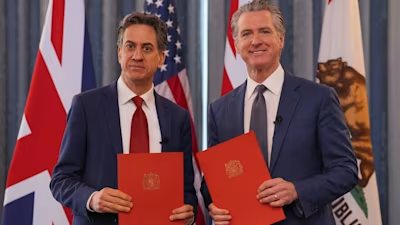
Hot News: Former President Trump Blasts UK–California Green Energy Collaboration….

What happens to Prince Harry? In early 2020, Prince Harry and Meghan Markle made headlines around the world when they announced they would step back as senior members of the British royal family. Their decision — quickly dubbed “Megxit” by the press — followed months of mounting pressures and public scrutiny.
