
CELEBRITY
🔥 BREAKING: SAMUEL L. JACKSON DEMANDS AN IQ TEST — TRUMP SHUTS IT DOWN IN 13 SECONDS AS LATE-NIGHT ERUPTS ⚡ It was absolute late-night chaos when Samuel L. Jackson dropped a jaw-dropping challenge that instantly set the studio on fire — openly calling for an IQ test as Donald Trump became the punchline of the night. The moment detonated when Stephen Colbert calmly queued up Trump’s own words like airtight receipts, barely cracking a smile. Then Alec Baldwin stormed in with a blistering Trump impression so brutally accurate the audience audibly gasped. One line hit. Silence. Then the room exploded in laughter and applause. Jackson didn’t hold back, Colbert piled on, and Baldwin machine-gunned punchlines in a rapid-fire roast that shredded Trump’s ego, scandals, and public meltdowns in real time. Within seconds, Trump’s attempted shutdown collapsed — the power shifted instantly, and everyone in the room felt it. According to insiders, Trump was watching live — and completely LOST IT. One source says he “went ballistic,” pacing, shouting, and demanding the network shut it down immediately. The meltdown reportedly dragged on for nearly an hour. The clip has since gone nuclear online, with millions calling it “the most savage late-night takedown of the year.” Commentators say Colbert, Baldwin, and Jackson didn’t just mock Trump — they cracked him on live television. 👇 The Colbert–Baldwin–Jackson moment is now trending worldwide — watch the viral takedown that sent Trump into full meltdown before it vanishes… 👇🔥

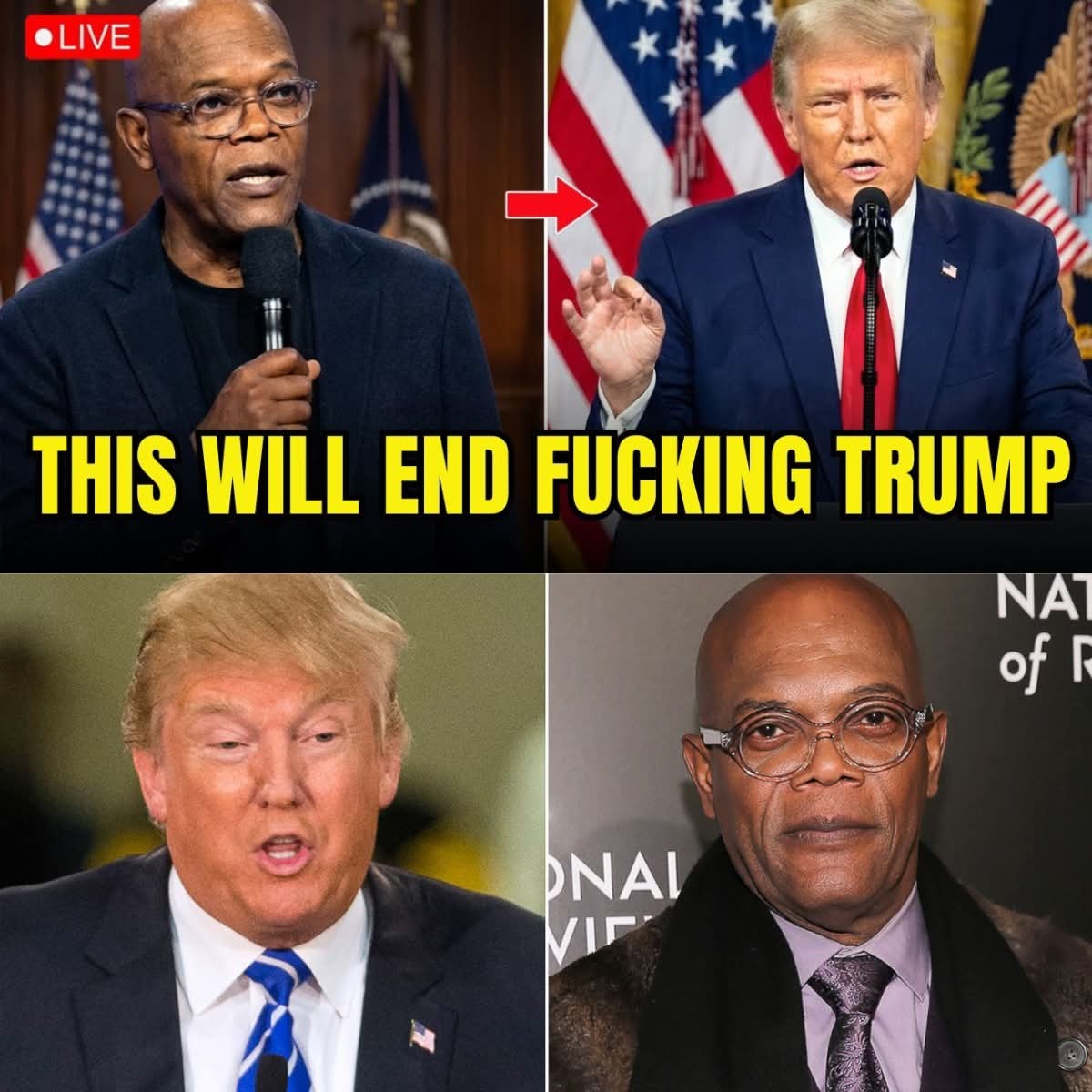
🔥 BREAKING: SAMUEL L. JACKSON DEMANDS AN IQ TEST — TRUMP SHUTS IT DOWN IN 13 SECONDS AS LATE-NIGHT ERUPTS ⚡
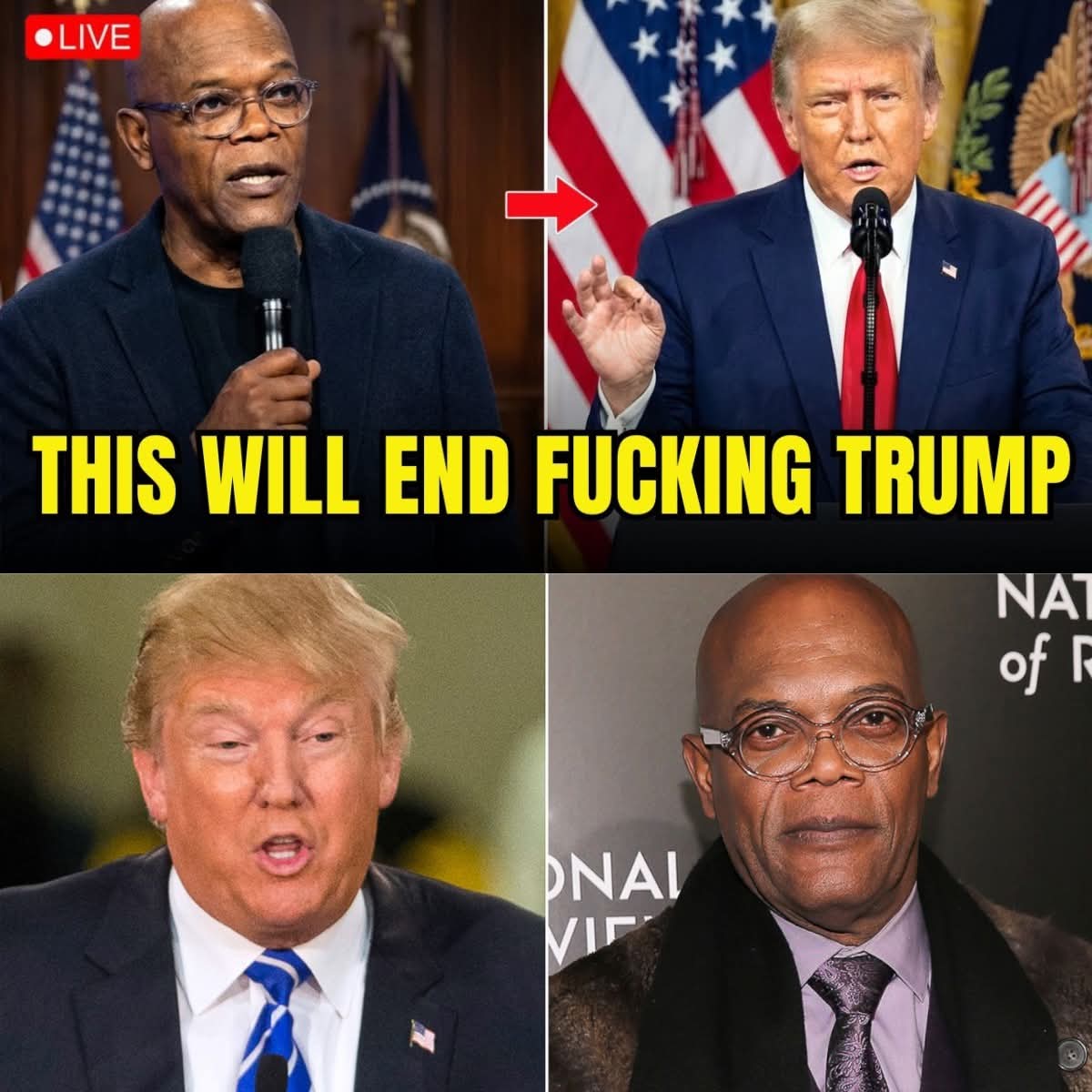
The moment was not built for subtlety. Promoted as a prime-time “unity conversation,” the televised forum promised sharp exchanges between public figures and a former president known for turning confrontation into spectacle. Producers anticipated sparks. Social media hoped for a meltdown. What few expected was that the most destabilizing moment of the night would arrive not through an insult or interruption, but through a calm, almost disarmingly simple question.
When Samuel L. Jackson stepped onto the live set, he carried himself with the ease of someone long accustomed to commanding a room. Relaxed shoulders, measured movements, a voice held in reserve. Across from him sat Donald Trump, smiling broadly, projecting confidence, prepared to dominate the exchange as he often had—by speaking louder, faster, and longer than anyone else.
The opening minutes followed a familiar script. The moderator began with polite questions about leadership and trust. Trump responded with a well-worn litany: electoral victories, hostile enemies, “fake news,” and the claim that “everyone loved him.” The audience applauded on cue. It was the rhythm of political television as usual.
Then the moderator turned to Jackson.
Jackson did not attack. He did not raise his voice or question Trump’s character. Instead, he asked something so ordinary it seemed almost out of place in a televised showdown: Could Trump name one mistake he had made, and what he had learned from it?
The studio went quiet.
Trump laughed and waved the question aside. “I don’t make mistakes like these people,” he said, gesturing toward the panel. “They’re the mistakes.” It was a line that drew nervous laughter, but Jackson did not press emotionally. He nodded once, as if he had anticipated the response.
“Okay,” Jackson said. “Then let’s do something even simpler. If you don’t make mistakes, why do your stories change?”
Trump’s smile tightened. “My stories don’t change,” he snapped.
At that moment, Jackson reached beneath his chair and lifted a thin folder, sealed with tape. He turned briefly to the camera, asking viewers to note where they were watching from, before returning his attention to Trump. “I’m not here with rumors,” he said evenly. “I’m here with your words.”
Behind them, the screen lit up: three dates, three quotations attributed to Trump. One in which he promised something. Another in which he denied ever making that promise. A third in which he claimed the opposite had been his plan all along. Jackson read them slowly, deliberately, like a judge reviewing a record. The audience murmured, recognizing a familiar pattern.
“That’s out of context,” Trump barked, leaning forward.
“Great,” Jackson replied. “Then give us the context—in one sentence.”
Trump began to ramble, his answer stretching across multiple points, grievances, and digressions. Jackson did not interrupt. Instead, he pointed to a clock graphic on the screen. “One sentence,” he repeated.
Trump’s voice rose. “You’re very disrespectful,” he said.
“No,” Jackson answered, smiling slightly. “I’m being precise. Disrespect is calling everyone low IQ. Precision is asking you to explain yourself.”
The audience applauded, louder this time. The moderator attempted to step in, but Jackson raised a hand. “Let him answer,” he said. “Because this is what people at home deal with every day—someone who talks around the question until the question disappears.”
Trump’s composure cracked. He lashed out at Jackson’s career, calling him a Hollywood puppet and accusing him of reading from a script. Jackson shrugged. “I am reading,” he said, tapping the folder. “I’m reading your record.”
Then came the line that shifted the room. “If you’re the strongest leader,” Jackson said, “why can’t you handle the weakest question?”
Trump stared back in silence, jaw tight, eyes flicking toward the moderator as if searching for an exit. Jackson leaned in slightly, still calm. “A leader doesn’t win by shouting,” he said. “A leader wins by answering. So I’ll ask again. One mistake. One lesson.”
Trump opened his mouth, then closed it. The pause stretched long enough to feel uncomfortable even through the television screen. Finally, Trump erupted. “This is a setup,” he shouted. “This show is rigged.” He shoved his chair back, knocking over a glass of water as cameras caught the spill. The audience gasped.
Jackson did not move. He waited.
When Trump tried to regain control by raising his voice further, Jackson responded in the same steady tone. “That’s the difference,” he said. “When you don’t have an answer, you turn up the volume. When you do, you turn up the clarity.”
The moderator called for a commercial break, but the moment had already crystallized. In a media landscape dominated by outrage and performance, the exchange offered a rare inversion of power. Trump, long adept at overwhelming opponents through sheer force of personality, had been disarmed not by mockery, but by restraint.
The segment ended without resolution. But for many viewers, the image lingered: a former president undone not by an attack, but by a question he refused—or was unable—to answer.






Tennis legend Serena Williams is making waves again! She’s just shared brand-new, never-before-seen photos and videos that have fans talking, especially after many asked for something fresh beyond her usual posts. The latest content is bold, eye-catching, and definitely sparking plenty of reactions online.

BBC News: Iranian state TV has confirmed the death of Ayatollah Ali Khamenei, the 86-year-old ruler of Iran for more than three decades…

Fox News: Three Troops Killed, Five Badly Wounded During ‘Operation Epic Fury’

US-Iran War LIVE: United Nations Security Council Holds Emergency Meeting After United States-Israel Strikes on Iran

“I’m over it” – Social Media Explodes After Cardi B Reveals Plans to Remove Butt Implants in Colombia

BBC News: US President Donald Trump’s opponents in the two houses of Congress have called for him to be removed from office after the violent invasion of the Capitol by a mob of his supporters….

“I Touch myself” Serena Williams wants women to pay a little more attention to their breasts, which is Breast Cancer Awareness…. In a new ad, the tennis star goes topless as she sings “I Touch Myself” by Divinyls.

BBC News Reports: The BBC understands that the British government has not authorized the United States to use UK military bases to support any potential strikes on …

PORTER: Serena Williams Reflects on Early Body Image Struggles: ‘I Had Big Boobs, Butt’ When ‘Every Athlete Was Super Thin’…
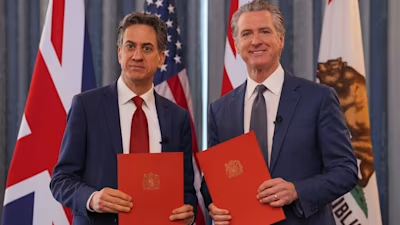
Hot News: Former President Trump Blasts UK–California Green Energy Collaboration….

What happens to Prince Harry? In early 2020, Prince Harry and Meghan Markle made headlines around the world when they announced they would step back as senior members of the British royal family. Their decision — quickly dubbed “Megxit” by the press — followed months of mounting pressures and public scrutiny.
